
New windows and doors improve comfort, cut energy bills and add long-term value to your home. Hale Windows & Doors Enterprise pairs proven product lines with a local vetted installing partner for lasting performance - and a price put in writing.
Choose your installer
The unit is half the job - the install is the other half. Background-checked local installers measure, set, seal and insulate every opening, and they know the lines we quote inside and out.
Select the right products
Compare styles, materials and glass packages side by side until the fit is right for your rooms, your budget and your goals. The product-line comparison below is the place to start.
Prepare your home for install
Before install day we walk you through a short checklist - furniture pulled back, treatments down, a clear path to each opening - so install day is watch-it-happen, not scramble.
Compare the Lines We Quote
Every project is priced on the same lines, side by side - the price indicators below are relative, and your consultant shows exact numbers on your actual openings.
PGTThe line homeowners arrive naming - the most impact certifications in the industry$$$
- More impact certifications than any other line we quote
- WinGuard, EnergyVue and ClassicVue Max systems built for every wind zone
- 99% on-time delivery keeps your install date on the calendar
CGIThe heavyweight impact line$$$$$
- Large-missile impact ratings for the strictest wind zones
- Architectural-grade aluminum with commercial-depth frames
- The line we quote when protection is the whole point
CWSThe value pick$$
- Vinyl systems built to strict wind codes
- Strong energy packages at the friendliest price point
- The smart start for whole-home replacements on a budget
ESWSlim lines, big glass$$$$
- Narrow-sightline aluminum for modern elevations
- Oversized openings and floor-to-ceiling glass
- Impact-rated without the bunker look
ECOThe aluminum impact workhorse$$$
- Factory-built aluminum impact systems
- A strong price-to-protection ratio for coastal homes
- Proven lines with short lead times
How Long Do Windows Last in Enterprise, NV? The Short Answer
Most windows sold in the U.S. carry a 20-25 year expected lifespan, but in Enterprise, NV, builder-grade vinyl dual-pane windows usually reach functional end-of-life at 15-20 years because Mojave UV and thermal cycling wear out seals, desiccant, and weatherstripping faster than temperate-climate test conditions assume. If your windows were installed during the 1990s-2000s tract build-out here, they’re likely already in their failure window or close to it. Call (866) 616-0837 if you want a straight answer on yours without a pitch.
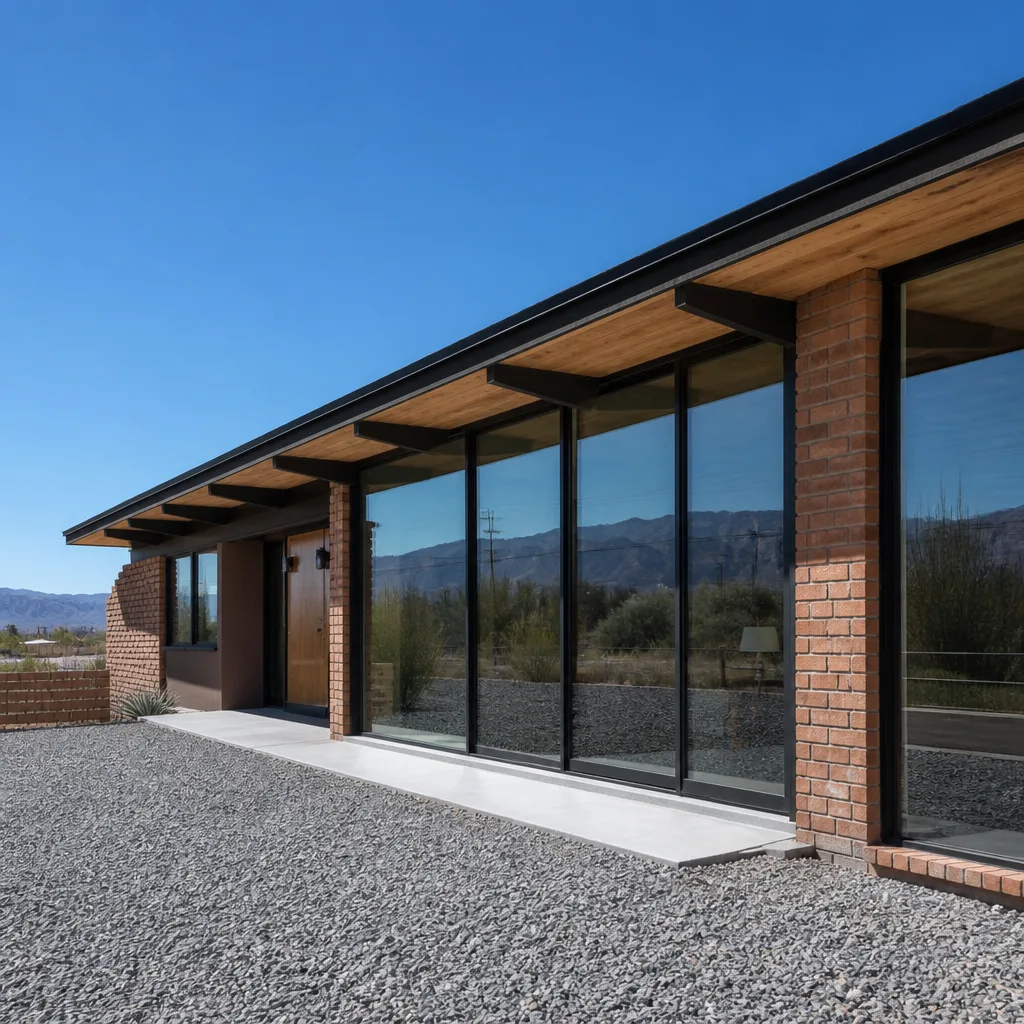
Why the National “20-25 Years” Number Is Too Generous Here
The manufacturer lifespan figures you see quoted on box-store websites and window-industry blogs come from laboratory testing and field data gathered in milder climates, including places like Portland, where summer highs sit in the low 80s and daily UV exposure stays moderate. Those conditions don’t exist in Enterprise. Summer highs here routinely exceed 105°F for 60+ days a year, and daily UV index hits 10-12 through much of the summer. A builder-grade vinyl dual-pane unit that would legitimately last 24 years in Portland is functionally done at 16-20 years here. That isn’t a sales tactic. It’s why entire subdivisions across the Las Vegas Valley are in coordinated replacement cycles right now, and why our crews see the same failures in the same tract streets in the same year.
Three separate degradation paths run faster in Enterprise than the industry average accounts for: IGU desiccant saturation, vinyl extrusion losing plasticity, and weatherstripping losing its rebound. Each one hits at a different age, which is why “when should I replace my windows?” doesn’t have a single clean answer.
Climate-Adjusted Window Lifespan by Material in Enterprise
Here’s what we actually see across the housing stock in Enterprise, where almost every window and door was installed within the same two-decade stretch of master-planned tract build-out. Ranges below are the realistic age at which the window stops performing, not the age at which it looks broken from the street.
| Material | Expected Life in Enterprise, NV | What Fails First |
|---|---|---|
| Builder-grade vinyl, dual-pane | 15-20 years | IGU seal, then weatherstripping |
| Upgraded vinyl with UV-stabilized extrusions | 20-26 years | Weatherstripping, later seal |
| Aluminum frame (original single-pane seals) | Frame 20-30 years; original seals 12-18 years | Seals first; frame lasts much longer |
| Fiberglass | 25-35 years | Hardware, then seal |
The material matters, but the glazing stack and the extrusion chemistry matter just as much. A UV-stabilized vinyl from a line like PGT or CGI handles the solar load here noticeably better than the builder originals installed in most Enterprise subdivisions, which is why upgraded vinyl stretches past 20 years while the originals usually don’t. When a homeowner asks us to quote a replacement, we match the product to the window’s orientation – west- and south-facing glass takes the worst sun and deserves the better glazing. That’s what our eight professional lines give us room to do rather than pushing one brand on every job.
Desiccant Saturation: The 15-18 Year Mark
The desiccant beads inside a sealed double-pane unit exist to absorb the trace moisture that gets past the perimeter seal. Each thermal cycle drives moisture vapor through the seal material and into the airspace. In the Las Vegas Valley, where a window may swing 60+ degrees between a summer afternoon and a winter night, an insulate glass unit (IGU) absorbs far more moisture per cycle than the same unit would in a temperate climate. The desiccant saturates faster, and once it’s saturated, the next hard summer pushes fog past its capacity.
What we see in Enterprise: at the 15-18 year mark, most original builder-grade IGUs here show early seal failure – a faint fogging in one corner after a monsoon-season humidity spike, or a slight film when the sun hits at a low angle. By 20-22 years, the majority have failed outright or are within 2 years of it. A foggy window isn’t just a visual annoyance; the airspace is no longer insulating, so the glass is behaving like a single pane during the worst heat.
Weatherstripping: The 12-18 Year Failure Most Homeowners Miss
Weatherstripping is the humble strip that makes the window seal. On Enterprise sliders and casements, EPDM and foam strips typically harden past functional sealing at 12-18 years because UV and ozone break the rubber down faster here than anywhere mild. That timeline is earlier than the frame’s 20-year-plus visual life, which means a common scenario we diagnose: the frame still looks intact, the glass still looks clear, and the homeowner is baffled about why a room feels drafty in February or why stairwells are dusty after a windy day. The weatherstripping has lost its rebound and is no longer wiping against the sash.
That’s the kind of call a Window Replacement conversation usually starts with. Sometimes a strip is genuinely before its time and a repair is the honest answer. Sometimes the strip is the canary, and the seal and glazing are right behind it. What we won’t do is guess. A written price, in your hands before any tool comes out – that’s how every Hale job starts.
The HOA and Resale Angle in Enterprise
Enterprise is a master-planned, largely built-out Las Vegas Valley suburb where most subdivisions carry architectural CC&Rs. Many of those CC&Rs specify that windows showing visible fogging or damage may be flagged in an HOA inspection. Waiting until a window fully fails sounds thrifty until a compliance notice arrives on your door, which limits your product-choice window (pun intended) and locks in a timeline you didn’t pick.
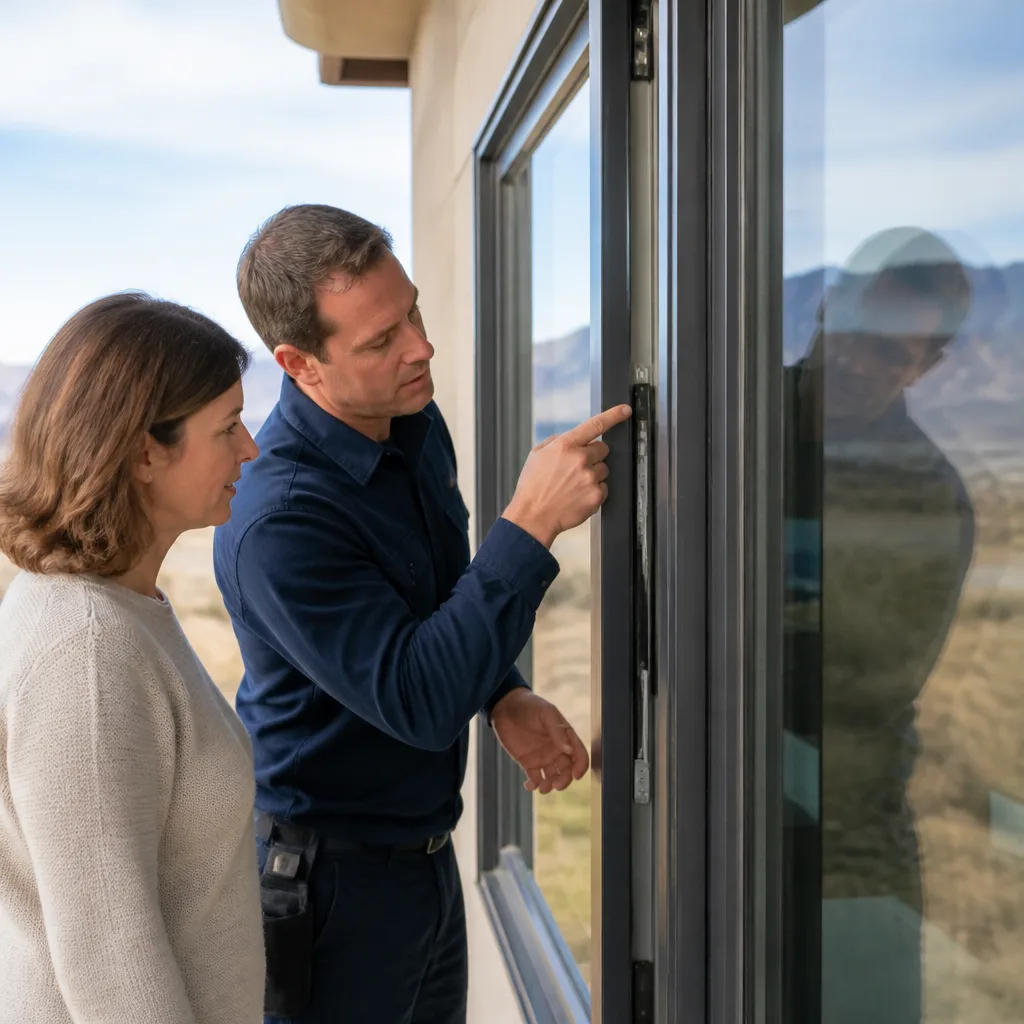
The other wrinkle: any visible exterior change – frame color, door style, added sliders – usually needs HOA architectural approval before the install. We walk homeowners through that sequence on every quote. Installing first and asking for approval later is the expensive way to learn how Enterprise CC&Rs work.
Why Replacing at Year 18 Beats Waiting for Failure
The math on this is straightforward. Replace a window at year 18 and the 365-Day Done Right Promise is live on that new unit from the day of install. If the new window shows any early seal or frame issue inside that first year, Hale returns at no charge. Wait until a window fully fails, and you’re choosing a product under time pressure, often with a water-stain or glass-fog problem that’s already inside the house.
Fiberglass, upgraded vinyl, and properly glazed aluminum all carry longer service lives than the originals most Enterprise homeowners are replacing. If you want to talk through the full product mix available to a Window Replacement in Enterprise, that’s exactly the conversation we’re set up for.
What to Look For as You Check Each Window
- Fog or film between the panes: the seal has failed and the IGU is past the point where it’s insulating.
- Draft at the perimeter when you hold a hand up: weatherstripping has hardened; often repairable, sometimes the first symptom of a bigger issue.
- Condensation on the inside of the glass on cool mornings: the airspace is compromised even if you can’t see visible fog yet.
- Sticking or racking sliders and casements: heat-driven frame expansion is a known issue in Enterprise.
- Chips, cracking, or a soft sash: vinyl embrittlement from UV exposure.
One brief safety note: window glass and second-story frames are genuinely dangerous to work on, especially in the summer heat, and the seal and glazing work itself involves handling sealed units that can shatter under stress. That’s a job for a trained installer, not a weekend project.
What Does Window Replacement Cost in Enterprise?
A rough answer first, because that’s what most callers want: a typical builder-grade vinyl dual-pane replacement window in Enterprise runs roughly $550-$1,100 per window installed, depending on size, glazing upgrade, and access. A full house of 12-15 windows typically lands between $7,000 and $15,000. Two-story egress windows and upgraded lines from PGT, CGI, or CWS sit at the higher end. These are the ranges we see on actual Enterprise jobs, not hypothetical figures.
FAQs
If your windows are 15+ years old and you see any fog between the panes, a draft at the perimeter, or visible sagging sashes, they’re past their rated service life for this climate and are costing you energy. The clearest single tell is fogged or filmed glass, which means the seal has failed and the IGU is no longer insulating. Call (866) 616-0837 for a free assessment if you’d like a straight answer on which of your windows need attention and which don’t.
Repair only makes sense when the frame and weatherstripping are still sound and the only issue is a failed seal – a single foggy unit in a house of otherwise healthy windows can often be repaired at a fraction of replacement. If the frame is old vinyl, the weatherstripping has hardened, or multiple windows are fogging within a year of each other, replacement is the better long-term spend. Call for a written price on both so you can compare with real numbers.
Most window replacement jobs in Enterprise run roughly $550-$1,100 per window installed, with a full house typically in the $7,000-$15,000 range depending on product line and glazing. Two-story and upgraded glazing sit at the higher end. Live pricing depends on the specific window and the line chosen. Call (866) 616-0837 for a written quote before anyone picks up a tool – no surprises on the invoice is the whole point.
Yes, and in Enterprise we recommend it. Replacing a window at year 18 rather than waiting for a fogging or seal failure to become a compliance notice or water intrusion gives you the full 365-Day Done Right Promise on the new unit from install day. If the replacement shows any early issue, we return at no charge. Call (866) 616-0837 to schedule a no-pressure assessment and get a written price in hand before deciding anything.
Talk to Hale Windows & Doors Enterprise
If you’d rather have your windows looked at by someone who can tell you what’s actually wearing out and when – not just what to buy – Hale Windows & Doors Enterprise offers a no-pressure assessment in Enterprise. Every technician is background-checked, identity-verified, photo-badged, and pre-announced by name and photo before the visit, so you know exactly who is at the door. Call (866) 616-0837 for a free estimate and a written price before any work begins.
Written by the team at Hale Windows & Doors Enterprise, serving Enterprise, NV.
Six Reasons Homeowners Choose Hale Windows & Doors Enterprise
Laminated glass and reinforced frames hold up to wind-driven rain, hail and flying debris, so your openings stay sealed when the weather turns.
Low-E insulated impact glass from our manufacturer lines commonly cuts monthly cooling bills 20-30%.
Laminated impact glass shuts out up to 40% of outside noise - traffic, neighbors, weather.
Monitoring services run $30-90 a month. Laminated impact glass resists forced entry around the clock, with no subscription.
Tighter seals and insulated glass even out hot and cold rooms and stop the drafts at the frame.
A full impact package upgrades curb appeal, buyer confidence and appraised value in one project.