
New windows and doors improve comfort, cut energy bills and add long-term value to your home. Hale Windows & Doors Enterprise pairs proven product lines with a local vetted installing partner for lasting performance - and a price put in writing.
Choose your installer
The unit is half the job - the install is the other half. Background-checked local installers measure, set, seal and insulate every opening, and they know the lines we quote inside and out.
Select the right products
Compare styles, materials and glass packages side by side until the fit is right for your rooms, your budget and your goals. The product-line comparison below is the place to start.
Prepare your home for install
Before install day we walk you through a short checklist - furniture pulled back, treatments down, a clear path to each opening - so install day is watch-it-happen, not scramble.
Compare the Lines We Quote
Every project is priced on the same lines, side by side - the price indicators below are relative, and your consultant shows exact numbers on your actual openings.
PGTThe line homeowners arrive naming - the most impact certifications in the industry$$$
- More impact certifications than any other line we quote
- WinGuard, EnergyVue and ClassicVue Max systems built for every wind zone
- 99% on-time delivery keeps your install date on the calendar
CGIThe heavyweight impact line$$$$$
- Large-missile impact ratings for the strictest wind zones
- Architectural-grade aluminum with commercial-depth frames
- The line we quote when protection is the whole point
CWSThe value pick$$
- Vinyl systems built to strict wind codes
- Strong energy packages at the friendliest price point
- The smart start for whole-home replacements on a budget
ESWSlim lines, big glass$$$$
- Narrow-sightline aluminum for modern elevations
- Oversized openings and floor-to-ceiling glass
- Impact-rated without the bunker look
ECOThe aluminum impact workhorse$$$
- Factory-built aluminum impact systems
- A strong price-to-protection ratio for coastal homes
- Proven lines with short lead times
What’s the Best Time of Year to Replace Windows in Enterprise, NV?
The best time of year to replace windows in Enterprise, NV is October through April, when daytime highs sit between 55°F and 85°F and silicone sealants cure at their rated strength. But the real answer is a step earlier than most homeowners expect: the ideal time to call is six to eight weeks before that window opens, because HOA architectural approval in Enterprise’s master-planned communities runs two to six weeks and has to clear before a permit is filed. Miss the HOA cycle and October becomes December. Call (866) 616-0837 to get on the fall schedule and lock in a written price first.
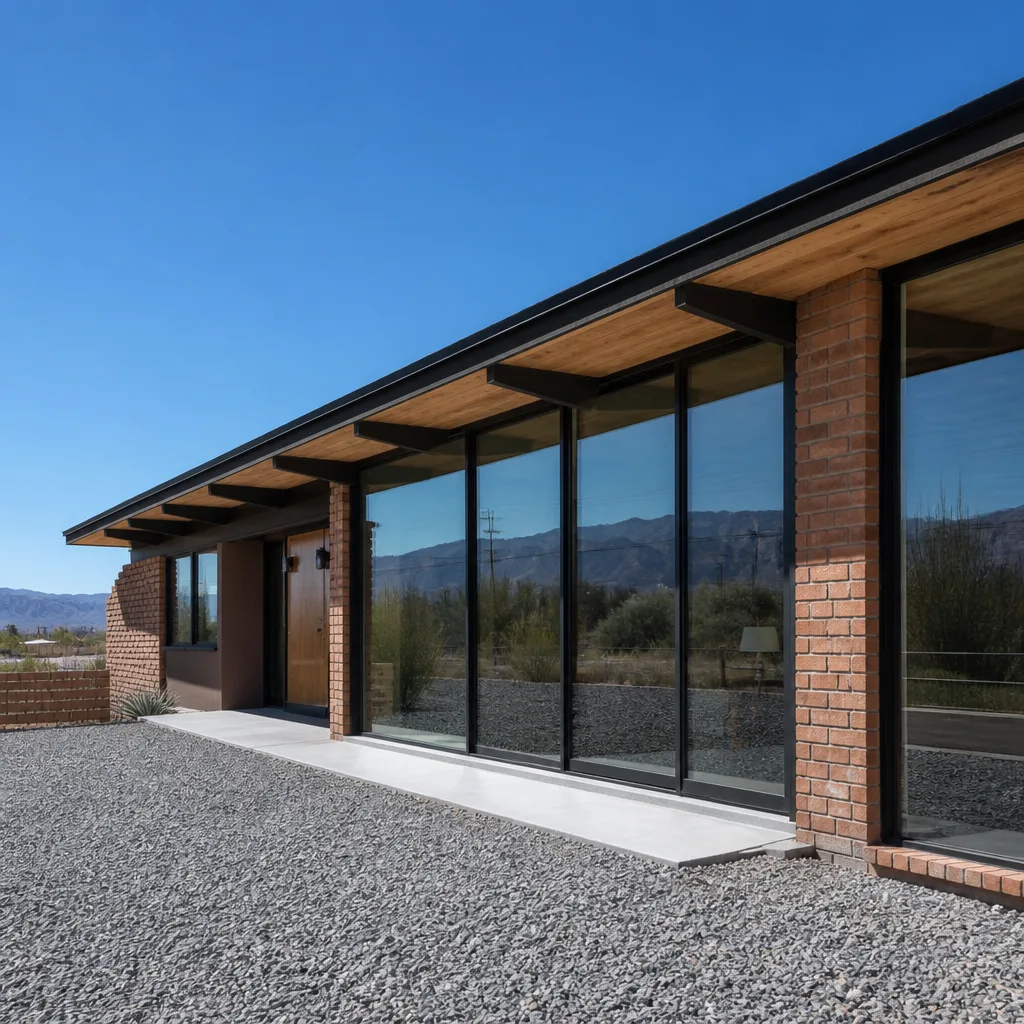
Why October through April Is the Real Installation Window Here
Enterprise sits in the Mojave Desert, and summer highs routinely run past 105°F. That number matters more than it sounds. Window installation depends on sealant and foam that cure within a temperature band, and vinyl frames that expand and contract with heat. Install a frame when it’s at its most compressed cold dimension and you can end up with gaps as it warms. Install it at full hot expansion and you can get binding at the sash. The 55°F to 85°F stretch from October through April puts frames near their mid-range thermal dimension, which is exactly where you want to shim them.
There’s a second reason the cooler months win. West- and south-facing glass in Enterprise takes the worst solar load in the Valley. October through April is also when you can pull old units and set new ones without fighting direct sun on the opening for most of the day.
What’s different about a summer install?
Summer installation isn’t impossible – it’s just costlier and slower. Above 105°F, foam backer rod and sealant application shrinks to early morning hours, crews work shorter shifts to stay safe, and stucco patching needs shading and misting to cure without cracking. Those constraints extend the job timeline and can add 10% to 15% to labor cost. If a window fails in July, we’ll still get it done. But a planned full replacement is better scheduled for the cool months.
The HOA Approval Timeline Is the Actual Bottleneck
This is the part generic “replace in spring or fall” advice skips. Most of Enterprise is master-planned, built out largely through the 1990s and 2000s, and governed by CC&Rs. Any visible exterior change – frame color, door style, an added patio slider – usually needs architectural review before a permit or install. Those committees typically meet monthly or bi-monthly, with submission deadlines two to three weeks ahead of the meeting.
Miss one cycle and you add four to six weeks to your start date. That’s how a homeowner who calls in October ends up installing in January. Working backward from a target October install:
- Mid-August: call, get a written price, and submit your HOA architectural request.
- Late August to mid-September: committee review and approval.
- Late September: permit filing with the approved plans.
- October: installation in the sweet-spot weather.
One more thing we do differently: your written price is in your hands before any HOA submission or permit filing. That way you’re not spending weeks in architectural review only to find the number moved. The price you approve is the price you get.
What to Look For Before You Schedule
Enterprise’s housing stock is hitting a predictable age. Much of it is now 15 to 25 years old, which is where sealed units fog, weatherstripping hardens, and original sliders start to fail. Because whole tracts went up within the same couple of decades, neighbors tend to replace in clusters – and a cluster fills the fall calendar fast as one household follows another. If you’re weighing repair versus replacement, our guide to Window Replacement covers how to tell a failed seal from a hardware problem. Here’s what to check before you book:
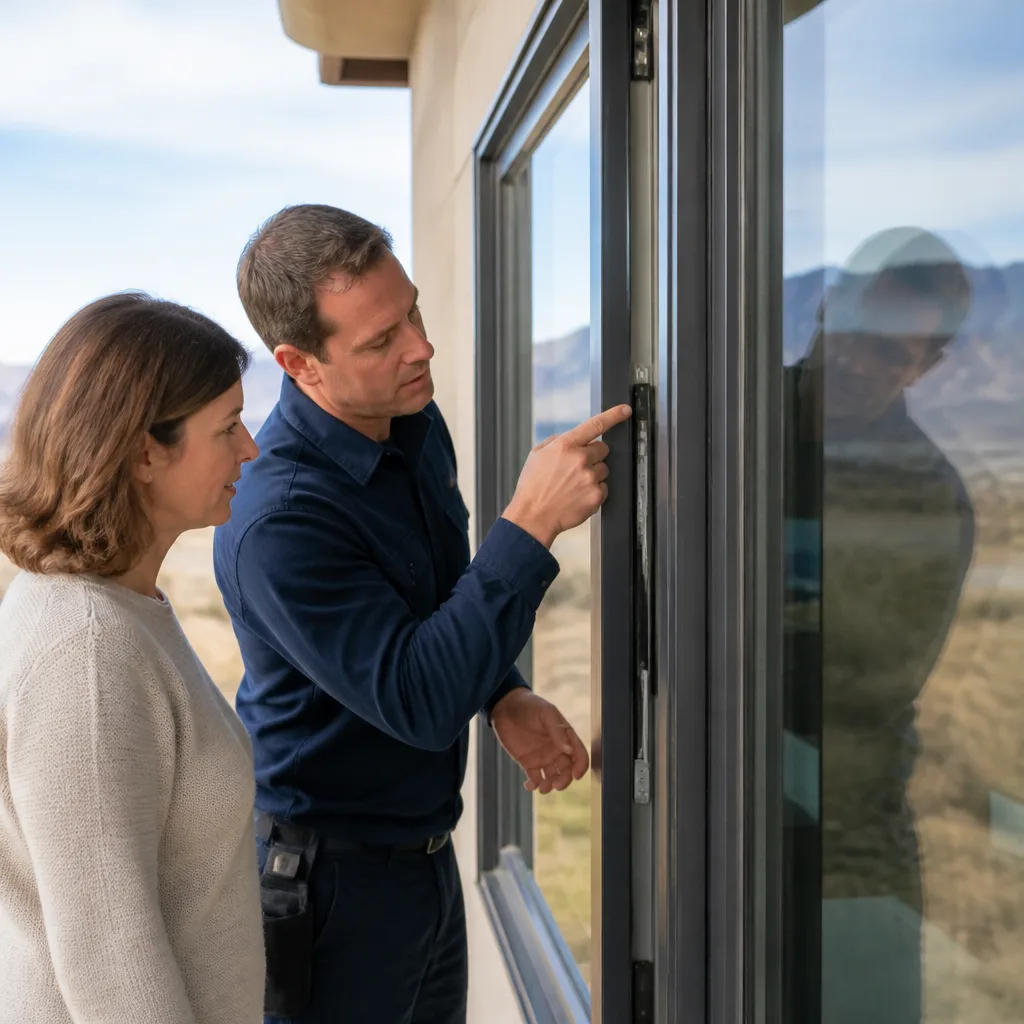
- Fogging or haze between panes – a failed seal and saturated desiccant; the unit won’t clear on its own.
- Hardened or cracked weatherstripping around doors and sliders.
- Sticking or binding sliding doors – often heat-racked frames or worn rollers.
- Drafts or visible gaps at the frame perimeter.
- Sun-baked vinyl that’s chalky, brittle, or warped on west- and south-facing walls.
Which brands fit an Enterprise replacement?
Matching builder-grade originals in a tract matters, and so does upgrading glazing for the solar load. Hale installs from eight professional lines, including ECO Window Systems, Mr-Glass, ViewLux, and Therma-Tru for doors. Low-E glass (a thin coating that blocks heat while letting light through) is a genuine energy upgrade here, not a marketing line – particularly on the west and south walls. We match the product to the opening rather than pushing one brand.
What Does Window Replacement Cost in Enterprise?
Replacement window pricing in Enterprise runs roughly $450 to $1,100 per window installed, depending on size, glazing, and frame material, with full-home projects commonly landing between $6,000 and $16,000. Sliding glass and patio doors run higher. These are the ranges homeowners should expect before they call, so the written quote isn’t a surprise:
| Item | Typical Enterprise range |
|---|---|
| Standard single window (installed) | $450 – $750 |
| Large or second-story window (installed) | $700 – $1,100 |
| Sliding glass / patio door (installed) | $1,800 – $4,500 |
| Full-home replacement (10-20 windows) | $6,000 – $16,000 |
| Summer-schedule labor premium | +10% to 15% |
Every job is quoted with a written price before work begins, and every repair carries a written guarantee – if it fails, a second visit is free. For the full picture on replacement scope, see Window Replacement in Enterprise.
Why call in August instead of waiting for fall?
Because the good October and November slots are claimed months ahead. Our phone line is answered by a live person 24 hours a day, seven days a week, so a homeowner can call at 7pm on a Sunday in August and get on the fall schedule before it fills – no voicemail, no callback queue. When a technician is dispatched, they arrive background-checked, identity-verified, photo-badged, and announced by name and photo before the visit. You know exactly who’s at the door before you open it.
FAQs
Both work, and October through April is the practical window overall – fall edges out spring because you’re installing ahead of the hottest months rather than just behind them. The bigger variable is HOA lead time, not the season itself. Call six to eight weeks before your target install date and either season is fine.
Two to six weeks is typical for Enterprise’s master-planned communities, and the clock depends on the committee’s meeting schedule. Most meet monthly or bi-monthly with submission deadlines two to three weeks ahead. Miss a cycle and you add four to six weeks. Call (866) 616-0837 for a written price you can attach to your submission.
Yes, but expect a longer timeline and higher labor cost – often 10% to 15% more – because sealant and stucco work are limited to early morning hours in 105°F-plus heat. If a window fails in July, call us; it can be handled. For a planned replacement, scheduling ahead for the cool months saves both time and money.
Fogging between the panes means the sealed unit has failed and needs replacement, not repair. Sticking sliders and hardened weatherstripping can sometimes be fixed. Call (866) 616-0837 for a no-pressure assessment – every repair carries a written guarantee, and the 365-Day Done Right Promise backs every job.
Get on the Fall Schedule Now
If you’d rather have it looked at, Hale Windows & Doors Enterprise offers a no-pressure assessment in Enterprise – call (866) 616-0837 to get a written price in hand before you submit anything to your HOA. Our technicians bring up to 17 years of experience to every job.
Written by the team at Hale Windows & Doors Enterprise, serving Enterprise, NV.
Six Reasons Homeowners Choose Hale Windows & Doors Enterprise
Laminated glass and reinforced frames hold up to wind-driven rain, hail and flying debris, so your openings stay sealed when the weather turns.
Low-E insulated impact glass from our manufacturer lines commonly cuts monthly cooling bills 20-30%.
Laminated impact glass shuts out up to 40% of outside noise - traffic, neighbors, weather.
Monitoring services run $30-90 a month. Laminated impact glass resists forced entry around the clock, with no subscription.
Tighter seals and insulated glass even out hot and cold rooms and stop the drafts at the frame.
A full impact package upgrades curb appeal, buyer confidence and appraised value in one project.