
New windows and doors improve comfort, cut energy bills and add long-term value to your home. Hale Windows & Doors Enterprise pairs proven product lines with a local vetted installing partner for lasting performance - and a price put in writing.
Choose your installer
The unit is half the job - the install is the other half. Background-checked local installers measure, set, seal and insulate every opening, and they know the lines we quote inside and out.
Select the right products
Compare styles, materials and glass packages side by side until the fit is right for your rooms, your budget and your goals. The product-line comparison below is the place to start.
Prepare your home for install
Before install day we walk you through a short checklist - furniture pulled back, treatments down, a clear path to each opening - so install day is watch-it-happen, not scramble.
Compare the Lines We Quote
Every project is priced on the same lines, side by side - the price indicators below are relative, and your consultant shows exact numbers on your actual openings.
PGTThe line homeowners arrive naming - the most impact certifications in the industry$$$
- More impact certifications than any other line we quote
- WinGuard, EnergyVue and ClassicVue Max systems built for every wind zone
- 99% on-time delivery keeps your install date on the calendar
CGIThe heavyweight impact line$$$$$
- Large-missile impact ratings for the strictest wind zones
- Architectural-grade aluminum with commercial-depth frames
- The line we quote when protection is the whole point
CWSThe value pick$$
- Vinyl systems built to strict wind codes
- Strong energy packages at the friendliest price point
- The smart start for whole-home replacements on a budget
ESWSlim lines, big glass$$$$
- Narrow-sightline aluminum for modern elevations
- Oversized openings and floor-to-ceiling glass
- Impact-rated without the bunker look
ECOThe aluminum impact workhorse$$$
- Factory-built aluminum impact systems
- A strong price-to-protection ratio for coastal homes
- Proven lines with short lead times
Signs You Need to Replace Your Windows in Enterprise, NV
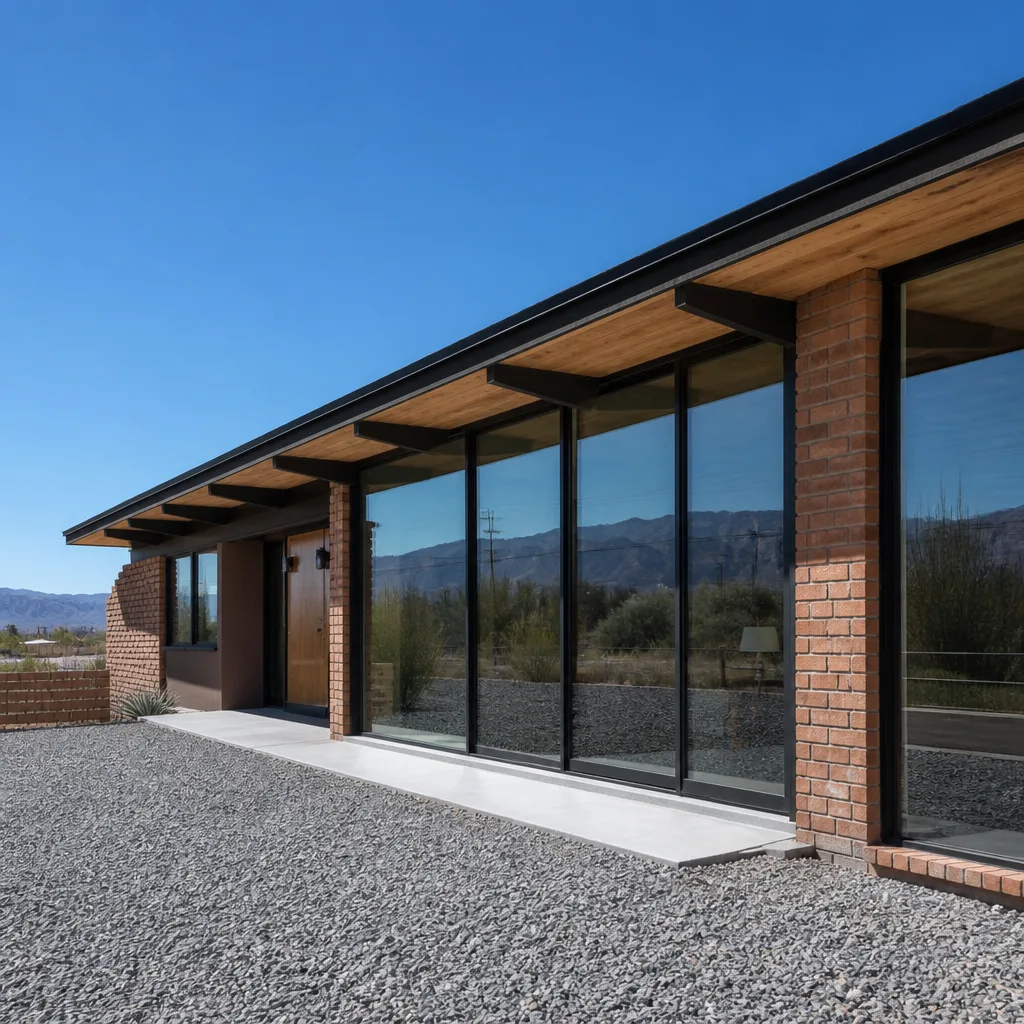
If your windows fog between the panes on a dry Enterprise day, the sealed glass unit has failed – moisture has gotten past the spacer bar and there’s no repair that clears it. The other signs that mean replacement rather than repair: chalky or yellowed vinyl frames, sashes that bind or won’t latch, visible corner gaps, and drafts you can feel at 105°F. Desert homeowners tend to file these under “cosmetic” and wait two or three summers too long. If you’re seeing any of them, call Hale Windows & Doors Enterprise at (866) 616-0837 and describe what you’re looking at – we answer live, day or night.
Why the Standard “Signs You Need New Windows” List Doesn’t Fit Enterprise
Most of those checklists were written for humid climates where wood rots and condensation runs down the inside of the glass. Enterprise is the opposite environment. This is an unincorporated stretch of the Las Vegas Valley built out mostly through the 1990s and 2000s, so whole subdivisions went up with the same builder-grade vinyl and aluminum units inside the same two-decade window. The sun hits hard, summer highs run past 105°F, humidity sits near nothing, and dust rides in on frequent high-wind events. That combination produces failure signals a humid-climate article won’t mention.
Fogging between the panes: the desiccant problem
Here’s the mechanism most homeowners have never had explained. Each insulated glass unit (IGU) – the double-pane sandwich – has an aluminum spacer bar around its edge packed with desiccant, a drying agent that keeps the air inside the unit bone-dry. That spacer goes through a daily expansion-and-contraction cycle as the glass heats and cools. After 15 to 25 years of that cycling in Enterprise heat, the desiccant saturates and the primary seal gives out. Once it’s saturated, even Nevada’s low humidity is enough to fog the inner surface of the glass. The fog will not clear on its own, and no amount of cleaning reaches it, because the moisture is sealed inside the unit. Full replacement of the glass unit is the only fix.
Yellowed or chalky vinyl: the frame is failing, not just the glass
Vinyl window frames depend on plasticizers to stay slightly flexible so they can move with temperature swings. Mojave UV breaks those plasticizers down faster than manufacturer test cycles assume. A frame that looks yellowed or leaves a chalky residue on your hand has lost that flexibility. It no longer seals the way it did, and the frame itself is the failing component – new glass in a dead frame won’t solve it. If you’re pricing out replacement, our Window Replacement page lays out what actually gets swapped and why.
Heat-racked frames that bind or won’t latch
Enterprise tract homes run hot attics – above 150°F in July and August is normal. That heat transfers down into the wood framing around each window opening. After 15 to 25 summer cycles, that framing compresses and shifts, and the window follows it: sashes stick halfway up, latches don’t catch, and a gap opens at one corner. That last one matters. A window that won’t latch is a security problem and an energy problem, not a cosmetic one. West- and south-facing glass takes the worst of it, which is why one side of the house usually fails first.
What to Look For: Repair vs. Replace
Not every problem means a new window. Here’s how we sort it when a homeowner walks us through what they’re seeing.
| What you’re seeing | Usually repair | Usually replace |
|---|---|---|
| Fog or haze between the panes | – | Yes – seal is gone, desiccant saturated |
| Yellowed, chalky, or brittle vinyl frame | – | Yes – frame has lost flexibility |
| Window binds in the track or won’t latch | Sometimes – if frame is square | If there’s a corner gap or racked opening |
| Hardened weatherstripping, drafty edges | Yes | If combined with fogging or frame damage |
| Failed slider rollers or a dragging patio door | Often yes | If the frame or glass is also compromised |
Checking all original windows at once – rather than replacing one fogged unit at a time – usually saves money. Each separate job carries its own mobilization, and in Enterprise, exterior changes like frame color or added sliders generally need HOA architectural approval before the install, so batching the work means one approval instead of three.
Can you fix fogged windows, or do they have to be replaced?
They have to be replaced. Once the seal and desiccant fail, the insulated unit is finished – there’s no resealing, drilling, or drying that restores it. What a window specialist can do is replace just the glass unit (the IGU) if the frame is still sound and square, which costs less than a full window swap. If the vinyl has gone chalky or the frame won’t sit true, the whole window comes out.
What does window replacement cost in Enterprise?
Most Enterprise homeowners pay between $450 and $1,200 per window installed, depending on size, glazing, and whether it’s a standard slider or a large second-story unit facing the Strip view corridor. Here’s how that breaks down:
- Standard dual-pane vinyl window, builder-size: roughly $450 to $750 installed
- Large or second-story unit, solar-control glass: roughly $750 to $1,200 installed
- Patio slider replacement: higher than a standard window, quoted per opening
- Glass-unit-only replacement, sound frame: the low end of the range above
Those ranges assume builder-grade sizing that matches what’s already in the opening. Every job with Hale Windows & Doors Enterprise is quoted with a written price before any work starts – no numbers that shift on the invoice. We work with professional-grade lines including PGT, ViewLux, and Mr-Glass, and match the product to the opening rather than pushing one brand across the board. Upgrading to low-E glass (a thin coating that blocks heat while letting light through) is worth asking about on west- and south-facing walls – in this climate it’s a real energy difference, not a sales line.
Why we take the trust question seriously
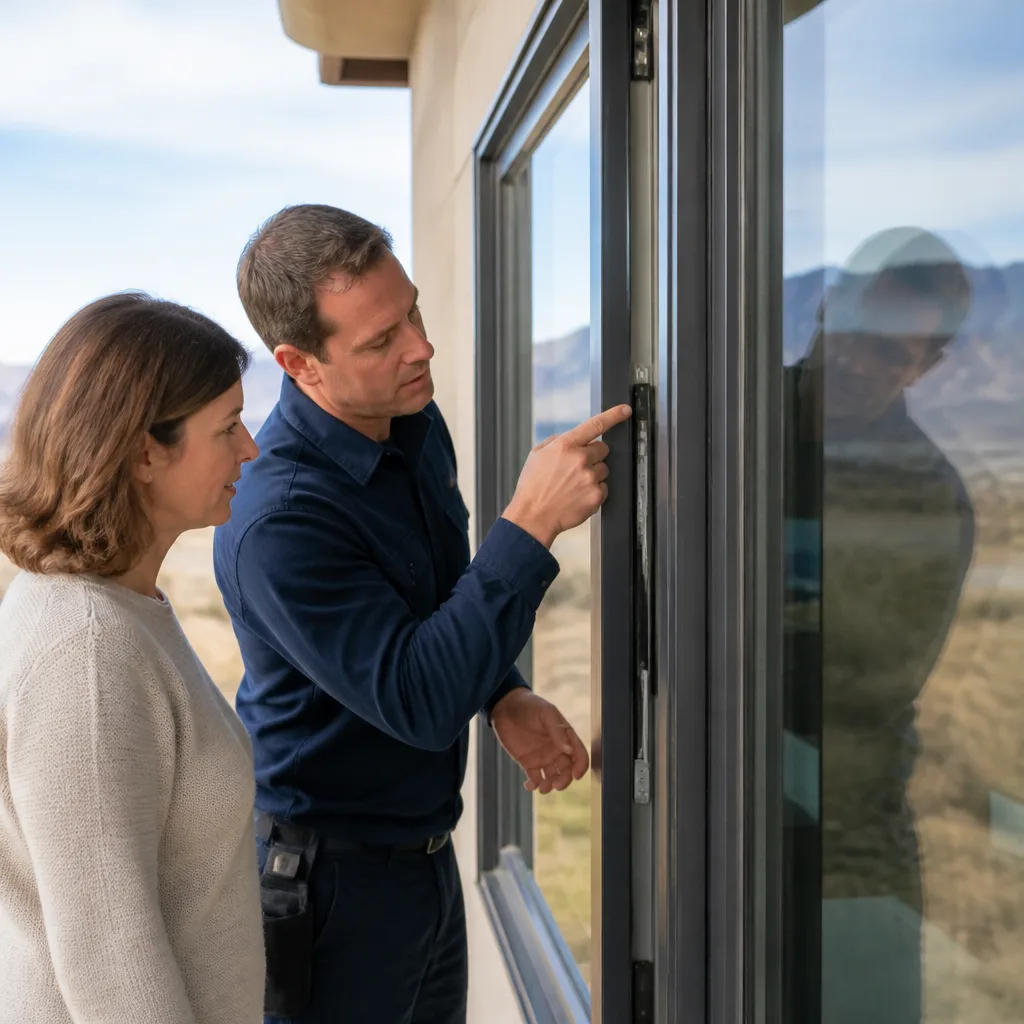
Replacing windows means someone spends hours at your house, often with a ladder against the wall and access to every room. A lot of our Enterprise customers are home alone during the day, have young kids, or are older homeowners who simply don’t want to open their door to a stranger. That’s why every technician who comes out is background-checked, identity-verified, photo-badged, and sent to you by name and photo before the visit – the Threshold Standard we hold on every job. If a repair fails, there’s a written guarantee on it, and a second visit is free. If the work isn’t right within a year, the 365-Day Done Right Promise applies: we make it right. Our technicians have up to 17 years of experience, and the phone line is answered by a live person 24 hours a day – so if fogging shows up on a Saturday morning, you can call and get an actual answer.
FAQs
Repair is cheaper only when the frame is sound – replacing just the glass unit costs less than a full window swap. Once the desiccant is saturated and the seal is broken, the unit can’t be fixed any other way, and if the vinyl has gone chalky you’re looking at a full replacement. Call (866) 616-0837 for an exact quote on your windows – estimates are free.
Yes, and soon. In Enterprise’s large west-side and southern tracts, units from the same builder tend to fail within a few years of each other. If one or two windows on your block are fogging, your original units are likely 12 to 24 months behind. Checking all of them at once avoids paying separate mobilization and permit costs down the road.
Sometimes, and it’s worth asking. If the frame is still square and the vinyl hasn’t gone yellow or chalky, replacing the insulated glass unit is the practical route. If the frame has lost flexibility or there’s a gap at the corner, a new pane in a failing frame won’t seal. Call us at (866) 616-0837 and describe what you’re seeing – we’ll tell you which it is.
Usually yes if the exterior appearance changes – frame color, grill pattern, or adding a patio slider. Most Enterprise HOAs require architectural approval before the permit or the install, so it’s worth checking your CC&Rs early. Matching the builder’s original look is the simplest path to a quick approval.
They can, especially on west- and south-facing glass that takes the heaviest solar load. Modern low-E and solar-control glazing block a meaningful amount of heat that single-pane or failed dual-pane units let straight through. The exact savings depend on your home and your glazing choices.
If you’d rather have it looked at than guess, Hale Windows & Doors Enterprise offers a no-pressure assessment in Enterprise – call (866) 616-0837 and we’ll walk through what your windows are actually doing.
Written by the team at Hale Windows & Doors Enterprise, serving Enterprise, NV.
Six Reasons Homeowners Choose Hale Windows & Doors Enterprise
Laminated glass and reinforced frames hold up to wind-driven rain, hail and flying debris, so your openings stay sealed when the weather turns.
Low-E insulated impact glass from our manufacturer lines commonly cuts monthly cooling bills 20-30%.
Laminated impact glass shuts out up to 40% of outside noise - traffic, neighbors, weather.
Monitoring services run $30-90 a month. Laminated impact glass resists forced entry around the clock, with no subscription.
Tighter seals and insulated glass even out hot and cold rooms and stop the drafts at the frame.
A full impact package upgrades curb appeal, buyer confidence and appraised value in one project.