
ECO Window Systems Window Replacement in Enterprise: A Homeowner’s Guide
A window rated with a Solar Heat Gain Coefficient of 0.22 can cut your cooling load by up to 25% compared to a standard double-pane unit. That number is real, and it’s the reason ECO Window Systems gets specified in desert homes around Enterprise. But here’s the part most sales sheets skip: that 0.22 only holds once the frame is flashed and sealed to manufacturer spec. A great window installed with sloppy sealing performs like an average one, and you’ll never know until your July power bill tells you. This guide covers both halves of that equation: what ECO’s numbers mean in practice, and what a correct installation actually looks like on job day. If you’d rather not referee an install yourself, call (866) 616-0837 and we’ll walk you through a free estimate.
What Does ECO Window Systems Make for a Desert Climate Like Enterprise’s?
ECO Window Systems builds aluminum and vinyl window lines engineered around hot, sunny climates, which is why they’re a natural fit for Enterprise. In climate-zone terms, this part of the Las Vegas Valley sits in what the energy codes call hot-dry desert territory (Zone 3B), where the enemy isn’t cold leaking in – it’s heat radiating through glass all afternoon. ECO’s product families address that with insulated glass, thermally broken frames (a barrier that stops heat from traveling straight through the metal), and low-E coatings (a thin film that blocks heat while letting light through).
For Enterprise homeowners, the ECO series worth asking about are the ones carrying ENERGY STAR certification for the Southwest region. Here’s what those numbers mean in plain words:
- U-factor measures how fast heat moves through the whole window (glass plus frame). Lower is better. In our climate, look for 0.30 or below.
- Solar Heat Gain Coefficient (SHGC) measures how much of the sun’s heat the window lets in. Lower is better here too. Southwest-certified units typically land in the 0.22 to 0.27 range.
- Visible Transmittance is how much daylight still comes through. You can block heat and still get a bright room – you don’t have to live in a cave.
One caveat we’ve seen bite homeowners: those ratings apply to the factory glass package, not the finished opening. The frame and seal are on the installer. That’s the whole reason the next section matters.
What Should an ECO Installation Include? The Spec Sheet in Plain Words
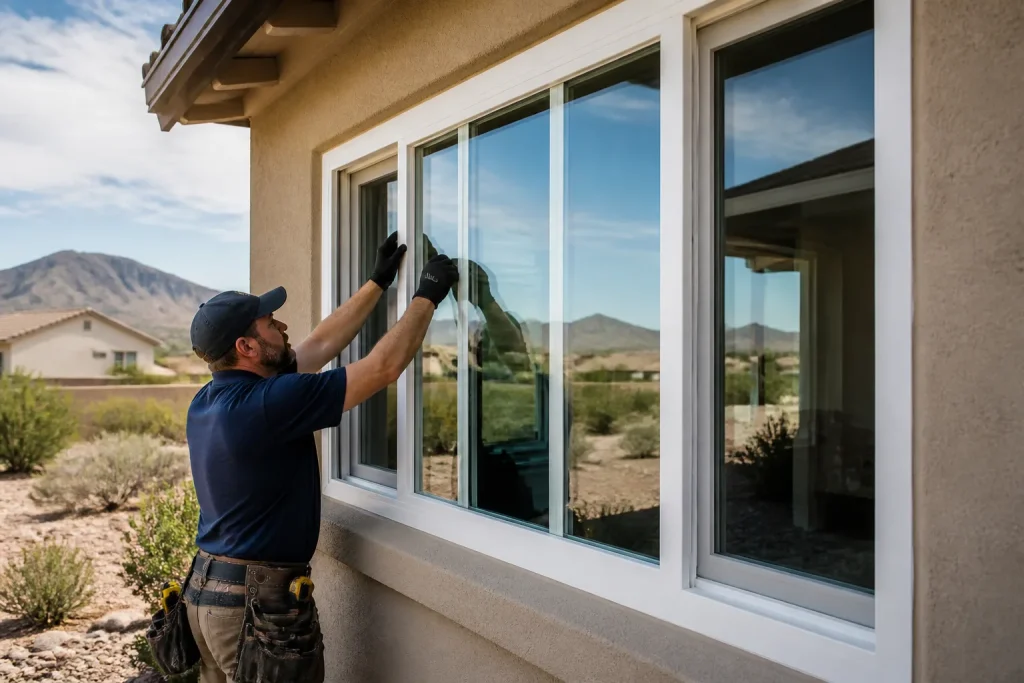
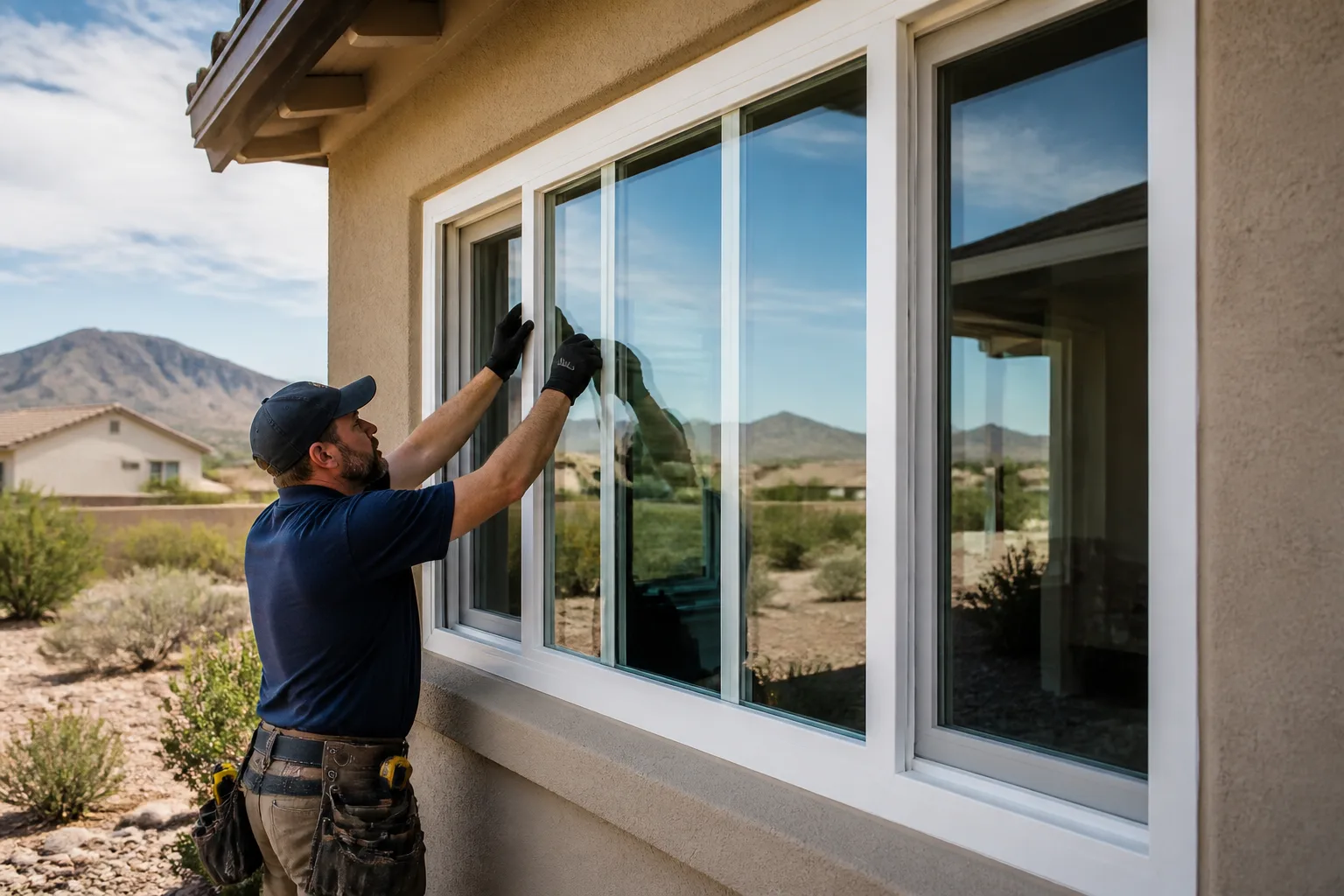
ECO ships an installation specification sheet with every order, and it’s not marketing fluff – it lists exactly how the window is supposed to go into the wall. Most failures we get called out to look at in Enterprise aren’t product failures at all. They’re installs that skipped a step on that sheet. Here’s the homeowner’s checklist, so you can verify it on job day without touching a single tool:
- Foam-filled frame cavities. The hollow chambers inside the frame should be filled with expanding foam to add insulation and rigidity. Ask the crew to show you before the window goes in.
- Low-expansion sealant at the interior and exterior perimeter. Standard expanding foam can bow a frame out of square. The spec calls for low-expansion foam and a sealant rated for exterior UV exposure. Out here, that matters – sun destroys the wrong caulk in two summers.
- Shimming tolerances. The window has to sit plumb and square on shims placed per the manufacturer’s diagram – not jammed in with whatever’s handy. An out-of-square frame means a poor seal and a sash that binds.
- Flashing at the rough opening. This is the step nobody photographs and everybody should. Water intrusion is what kills windows here, and it’s silent until it isn’t.
- Backer rod plus sealant at the exterior joint – not sealant alone. The backer rod keeps the sealant from pulling away as the wall and frame move at different rates in our temperature swings.
If a crew can’t tell you which spec sheet they’re following and where it lives, that’s your answer about the install.
When to Call a Pro
This is one place where we’ll be blunt: window replacement isn’t a homeowner project, and not just because it’s hard. Fall hazards from ladders, tempered glass under load, structural openings in a wall – all of it belongs to a trained installer. You can absolutely inspect the work, and we’d encourage it. But leave the flashing knife in the truck.
What Do ECO Window Systems Installs Cost in the Las Vegas Valley?
For planning purposes, ECO Window Systems replacement windows in the Las Vegas Valley generally run $700 to $1,400 per window installed, depending on size, glass package, and whether the job is a standard retrofit or requires re-framing. That’s not a quote, and anyone who gives you a per-window number without looking at your openings is guessing. But it gives you a filter: a bid far under that range usually means an undersized glass package, a skipped step on the sealant, or a crew paid to move fast.
We’ve seen a couple of patterns worth flagging in the Enterprise bids homeowners bring us:
- The “value window” swap. A number that looks like an ECO price, but the actual glass package is a builder-grade unit that misses Southwest ENERGY STAR thresholds.
- Line-item silence. A single lump-sum number with no breakdown by size or series makes it impossible to compare, which is exactly what it’s designed to do.
Ask for a written, line-item price before anyone starts. Not a verbal range – a document. Every job should be quoted that way, and every vendor should be able to hand one to you without hesitation.
How Does the ECO Warranty Transfer When You Sell the Home?
This is the part most window guides skip, and it’s where a good install quietly pays you back. ECO Window Systems warranties on the glass and frame are transferable to a subsequent owner in most cases, following the manufacturer’s terms – which means when you list the home in Enterprise or anywhere around the valley, you can hand the buyer a documented warranty on the windows. A recent replacement with a transferable warranty is a concrete selling point in a competitive market, and listing agents know it. It’s not abstract “value” – it’s a paper that says the glass is covered if something fails.
Two things to know: the transfer usually requires documentation (the original purchase record and warranty certificate), and some terms shorten the coverage period for second owners. So keep those documents with your closing file. If your goal is resale, ask your installer directly: “Does this warranty transfer to the next owner, and what paperwork do you provide at closing?” A shop that answers without stumbling has done it before.
How Do You Verify an Installer Really Carries ECO Certification?
Any contractor can put an ECO Window Systems logo on a website in an afternoon. That doesn’t mean they’ve been trained or authorized on the product. Asking for documentation isn’t rude – it’s exactly what a responsible homeowner should do before letting a crew into your house.
- “Can I see your dealer agreement or training certificate?” Every authorized ECO installer has one. Ask to see a physical or emailed copy. Legitimate shops aren’t offended.
- “Which ECO series are you proposing, and is it ENERGY STAR-certified for the Southwest?” You want a specific model name in the bid, not a vague “ECO window.”
- “Will you follow the manufacturer spec sheet on flashing and sealant?” Ask them to show it to you. If they can’t produce it, that’s telling.
- “Who’s coming to my door?” This is a biggie for a lot of our customers – parents, older homeowners, anyone who lives alone. Ask whether technicians are background-checked, identity-verified, and announced by name and photo before the visit. If the answer is fuzzy, so is the accountability.
In our experience, an installer who’s genuinely authorized on the product welcomes every one of these questions. The hesitation only appears when the logo is the whole story. That’s the standard we hold ourselves to, and it’s how every professional job should look.
The Bottom Line
ECO Window Systems makes a strong product for Enterprise’s heat, and a properly installed unit at SHGC 0.22 will show on your summer bills. The variables in that sentence are the ones worth managing: specific ECO series, ENERGY STAR Southwest certification, a written line-item price, and an installer who follows the flashing and sealant spec instead of faking it. If you’re comparing bids and one of them doesn’t come with a spec sheet and a written price before work starts, you’ve found the difference. If you’re in Enterprise and want a straight answer on any of this, we’d be glad to help – call (866) 616-0837 for a free estimate.
Related services in Enterprise: Window Replacement in Enterprise and Window Repair in Enterprise when a seal failure is worth fixing instead of replacing. If your front door is the weak spot in the envelope, see Front Door Replacement in Enterprise, or start at the Hale Windows & Doors Enterprise home.
Frequently Asked Questions
Yes – ECO builds aluminum and vinyl window lines designed around hot, sunny climates, and their Southwest-certified series meet the ENERGY STAR thresholds that matter in Enterprise’s Zone 3B desert climate. The series matters, not just the brand, so confirm the model name on the bid.
For a hot-dry climate, aim for an SHGC of roughly 0.22 to 0.27 and a U-factor of 0.30 or below. Those numbers are what earn ENERGY STAR’s Southwest regional certification. Lower SHGC blocks more solar heat; lower U-factor slows heat transfer through the frame.
Installed ECO windows in the Las Vegas Valley typically run about $700 to $1,400 per window, depending on size, glass package, and whether the opening needs re-framing. Quotes far below that range are often a sign of a cheaper glass package. Call (866) 616-0837 for a written, line-item estimate – free, no obligation.
In most cases, yes – the glass and frame warranties transfer to the next owner, following the manufacturer’s terms, and some coverage periods shorten for second owners. Keep your original purchase record and warranty certificate with your closing documents so the buyer receives them.
We’ve pulled ECO units out of homes near the Mountain’s Edge side of Enterprise where the install looked clean until we got the trim off – the flashing was missing and the sealant was a single bead of whatever was on the truck. The product was fine. The crew wasn’t. That’s the gap this guide exists to close, and it’s the reason we put the price in writing and stamp the work with a 365-Day Done Right Promise before the first tool comes out.
Call (866) 616-0837 for a free estimate and a written price on your project.
Written by the team at Hale Windows & Doors Enterprise.
Need Windows & Doors Help?
Call Hale Windows & Doors Enterprise - licensed & insured, here with fast after-hours help in Enterprise.
(866) 616-0837