
Therma-Tru Window Replacement in Enterprise: A Homeowner’s Guide
Here’s the thing nobody tells you at the quote stage: Therma-Tru doesn’t make windows. Therma-Tru makes entry door systems – fiberglass and steel doors, frames, thresholds, and glass inserts. So if a contractor handed you a bid labeled “Therma-Tru window replacement” in Enterprise, you’re either looking at a door line item someone mislabeled, or a quote that mixes door hardware with window labor. This guide sorts out what Therma-Tru actually manufactures, how it holds up in the Mojave heat, and what the installation details are that most crews skip.
What does Therma-Tru actually make?
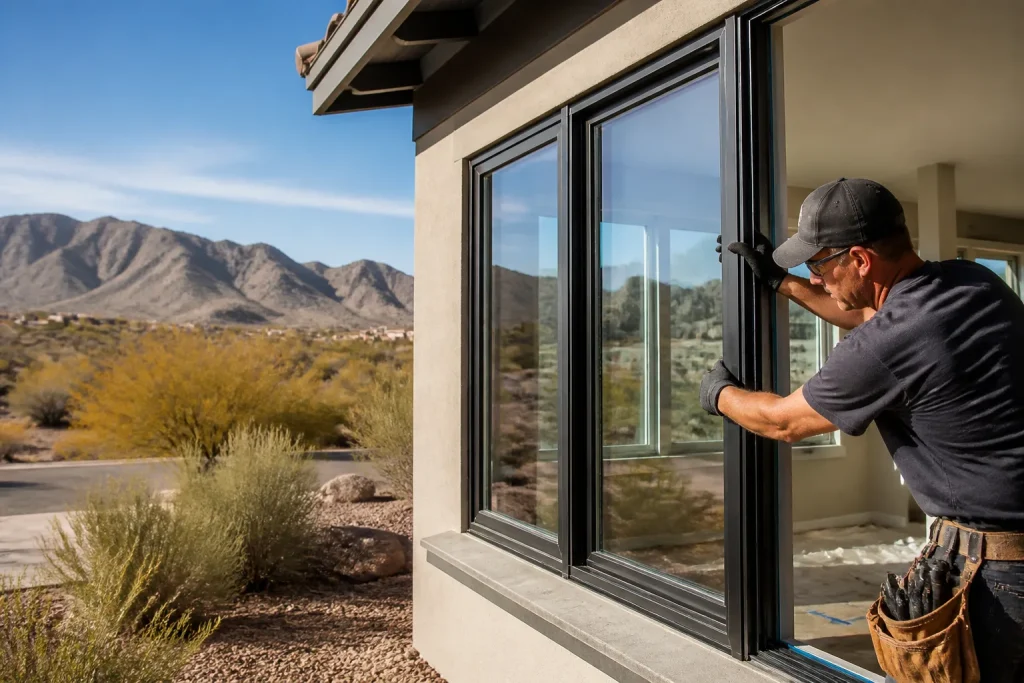
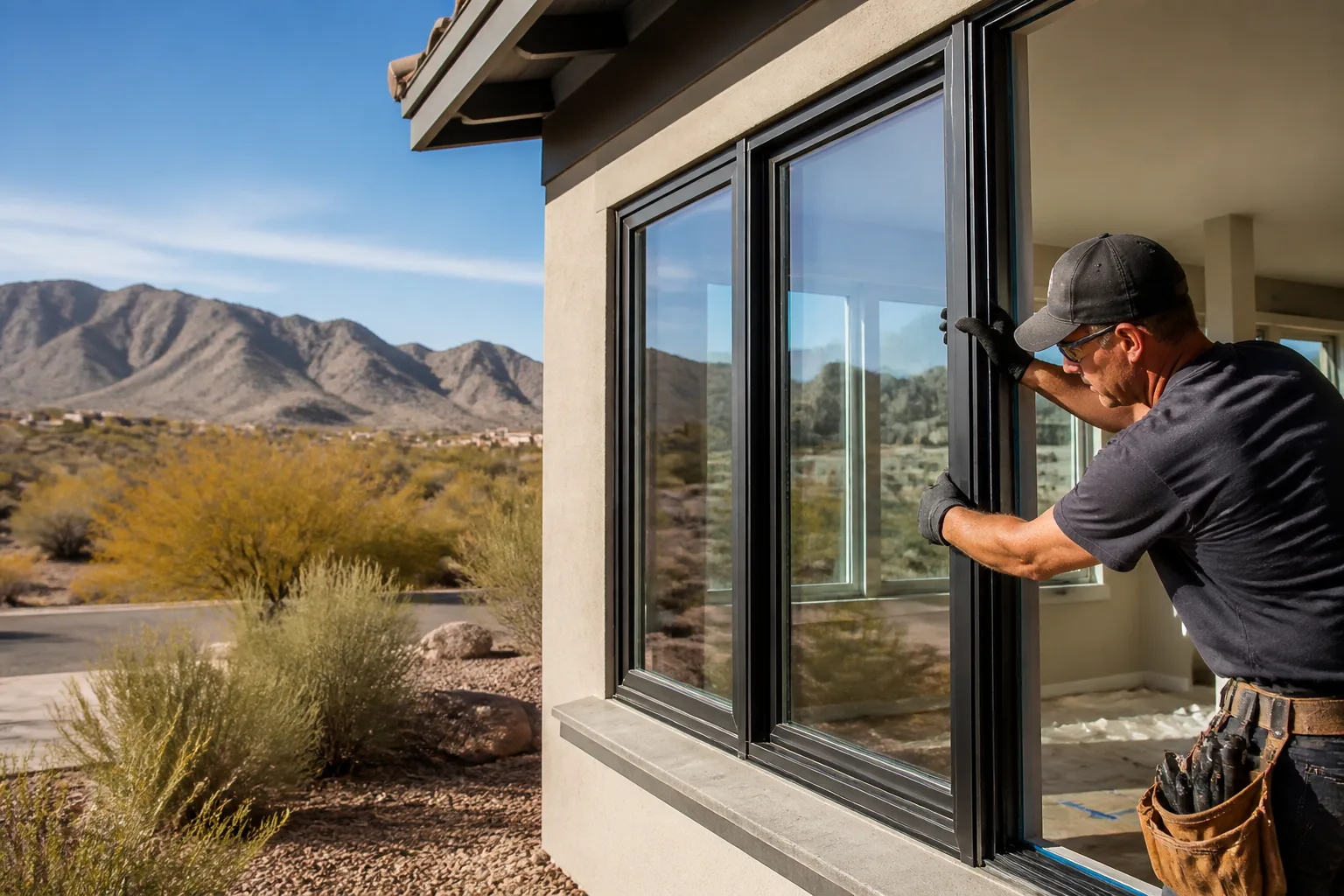
Therma-Tru manufactures fiberglass and steel entry door systems. The product line runs to door slabs, prehung door units, sidelites, transoms, glass inserts, and the frames and thresholds that hold them. It does not manufacture window units – fixed, casement, slider, or otherwise. For window replacement in Enterprise, we install PGT, CGI, CWS, ES Windows, ECO Window Systems, Mr-Glass, and ViewLux lines. Therma-Tru belongs on the door side of the ledger.
Why does this matter for a homeowner? Because the quote in your hand needs to reflect what each line item actually is. A “Therma-Tru front entry package” is a door system. A “Therma-Tru patio door” might be a door slab with glass inserts and a frame. Neither is a window. When you’re comparing bids, line items should read clearly: door slab, door frame, threshold, weatherstripping, glass insert, installation labor. If the language is muddy, ask.
This confusion is common enough that we field it weekly. Enterprise homeowners see “Therma-Tru” and assume it’s a window line because it shows up in the same bid alongside window products. It’s a door brand. A very good one – but a door brand.
If you’re weighing window replacement separate from a door project, our Window Replacement in Enterprise page covers the product tiers and lead times for the window lines we install.
Why does fiberglass outperform steel and wood in Enterprise’s climate?
Fiberglass doors expand and contract at roughly one-eighth the rate of steel doors across a temperature swing. That stat matters in Enterprise because exterior door surfaces on a south-facing elevation can reach 160°F in July. Steel doors move more with that heat. Wood doors move more still, and they also dry out and check in low-humidity air. Fiberglass holds its dimensions.
The other piece is the finish. Therma-Tru’s fiberglass doors come with a gel-coat finish that resists UV degradation better than a painted steel skin. In a climate where the sun is unrelenting nine months of the year, that finish is doing meaningful work. It’s not immortal – a gel-coat can chalk or fade over a long enough timeline – but it holds up in Enterprise better than most painted alternatives.
What does “rot-resistant” mean in a desert context? Wood doors in low-humidity environments don’t rot the way they do in coastal climates. They check, split, and dry out at the joints. Steel doors don’t rot either, but the seams and bottom rails can rust when they trap moisture. Fiberglass doesn’t do any of those things – no rot, no checking, no rusting – because the material itself doesn’t absorb water or feed microorganisms. That’s the practical difference in Enterprise: fiberglass is stable through the hot-dry cycle, and it doesn’t need the seasonal attention wood and steel do.
One caveat before you get too comfortable: even a great door system depends on the install. More on that below.
Which Therma-Tru series fits which door?
Therma-Tru’s fiberglass lineup runs across three broad tiers – Fiber-Classic, Smooth-Star, and Classic-Craft – and the right pick depends on where the door sits on your home and how much exposure it takes.
- Fiber-Classic – the entry tier. Good for a secondary door, a garage-entry door, or a rental property where the budget matters more than the finish detail. Woodgrain texture, solid fiberglass core, sensible price.
- Smooth-Star – the mid tier and the most common choice for a primary entry door in Enterprise. Smooth surface, paintable, holds up well under direct sun, and the price is usually mid-range. For a south-facing front door, this is where most homeowners land.
- Classic-Craft – the premium tier. Textured finish that reads closer to real wood, more detail on the panel design, and heavier construction. Appropriate for a front entry where the door is a visible part of the facade and you want the finish to hold its appearance over a long timeline.
For a patio-adjacent door that faces east and takes morning sun only, Fiber-Classic is usually the sensible pick – you’re not going to get the same UV punishment, so the extra money spent on Classic-Craft buys less here. For a west-facing secondary door that gets late-afternoon sun in July, Smooth-Star is a better bet. And if the door is the first thing a guest sees when they walk up, the finish detail on Classic-Craft is what most Enterprise homeowners choose.
Where the door sits relative to the sun is the single biggest driver of which tier makes sense. A south or west exposure gets the upgrade. A north or shaded exposure doesn’t need it.
What installation requirements actually affect a door’s performance?
This is the part most quotes skip. Three details matter in Enterprise more than anywhere else.
- Threshold adjustment for slab movement. Desert slabs move. Enterprise soils shift with the seasonal moisture cycle even in a dry climate, and a threshold that’s set to a fixed height in January may not seal properly by July. The threshold should be adjusted to sit flush and level against the door sweep through the full range of door movement – not just at the moment of install. Ask your installer how they account for slab movement.
- Compression weatherstripping spec. Standard foam weatherstripping compresses down over a summer or two in 110°F heat and loses its seal. The right spec is a compression gasket rated for the temperature range, usually a silicone or EPDM material rather than basic foam. It’s a small line item that determines whether your door actually seals after year two.
- Separate warranty on the slab versus the glass insert. The door slab carries Therma-Tru’s Limited Lifetime Warranty. The glass insert is a separate warranty – often shorter, sometimes a different cycle altogether. That distinction matters when something goes wrong. If your glass insert fogs, that’s a glass warranty claim, not a slab warranty claim. Know which is which before you sign.
We pulled a door out of a garage over in the Enterprise area last spring where the original installer had set the threshold with no allowance for slab movement. The door was a perfectly good Smooth-Star. It just didn’t seal anymore because the threshold had walked. That’s an install problem, not a product problem.
What does the Therma-Tru Limited Lifetime Warranty actually cover?
The warranty breaks into three buckets, and the terms differ. Here’s the plain-language version:
- Structural warranty (door slab). Covers defects in materials and workmanship of the door slab itself – delamination, warping, structural failure under normal use. Lifetime term for the original owner.
- Finish warranty. Covers the factory-applied finish on the fiberglass door – peeling, blistering, or cracking under normal conditions. The term is shorter than the structural warranty and is usually subject to exclusions around improper cleaning or installation. If you painted over a factory finish, the finish warranty likely doesn’t apply.
- Glass insert warranty. Covers the insulated glass unit inside the door. Separate term. Separate registration. Typically shorter than the structural warranty and often excluded from coverage if the glass has been broken or installed improperly.
Registration is the piece that actually makes it enforceable. Therma-Tru requires the door to be registered to activate the warranty – the installer’s paperwork, the serial numbers on the door, and the homeowner’s information need to be submitted to Therma-Tru. If the installer doesn’t hand you a registration record, ask for one. If you’re moving into an Enterprise home with an existing Therma-Tru door and you don’t have the registration, you can still contact Therma-Tru directly with the serial number from the door’s edge, but it takes longer and the coverage may not transfer fully.
A written price and a written guarantee matter here too. Make sure your installer documents the registration and gives you a copy. That’s part of what our Front Door Replacement in Enterprise process includes on every Therma-Tru job.
When should you call a pro?
Hanging a door is not a DIY project for most homeowners. The threshold adjustment, the plumb and square of the frame, and the weatherstripping compression spec are all things that fail quickly if they’re not done right, and a failed door install in Enterprise means heat coming in through the gap for years. That’s before you get to the warranty registration piece – which is easy to miss and hard to reconstruct later. The right time to call is before the quote process starts, so you can compare apples to apples and know what each installer will actually put in writing.
If you’re on the fence about whether the door needs service or replacement, our Window Repair in Enterprise page covers repair-vs-replace criteria for the window side of the house – and most of the same logic applies to doors.
The Bottom Line
Therma-Tru is a door brand. Not a window brand. That single fact clears up most of the confusion in a quote that says “Therma-Tru window replacement.” If you’re installing a fiberglass entry door in Enterprise, the product line is genuinely strong for the climate – low thermal expansion, UV-resistant gel-coat finish, and no rot or rust concern. Choose Fiber-Classic for secondary or sheltered doors, Smooth-Star for the primary entry, and Classic-Craft when the door is a visible part of the facade. Make sure the installer adjusts the threshold for slab movement, specs a proper compression weatherstripping, and registers the warranty in three buckets: structural, finish, and glass insert.
If you’re in Enterprise and need help, Hale Windows & Doors Enterprise offers free estimates – call (866) 616-0837. Every job comes with a written price in hand before work begins, and every install is backed by the 365-Day Done Right Promise. If it’s not right, we make it right.
Frequently Asked Questions
No. Therma-Tru manufactures fiberglass and steel entry door systems – door slabs, prehung units, sidelites, transoms, glass inserts, frames, and thresholds. It does not manufacture window units. If a quote in Enterprise lists “Therma-Tru windows,” it’s either mislabeled or mixing door products with window labor. Call (866) 616-0837 for a free estimate if you want a line-by-line clarification.
The door slab is designed for a long service life under normal conditions, and fiberglass doesn’t rot, check, or rust the way wood and steel do. The gel-coat finish holds up under UV exposure better than most painted alternatives, though it can chalk over a long timeline. The bigger driver of lifespan is the install: a properly adjusted threshold and correct weatherstripping compound keep the door performing through Enterprise’s hot-dry cycle. Call (866) 616-0837 for an estimate if you want a lifespan assessment on an existing door.
Smooth-Star. A south-facing door takes the heaviest UV and heat load of any elevation in Enterprise – exterior surfaces can hit 160°F in July. Smooth-Star’s smooth fiberglass surface and paintable finish hold up better on that exposure than Fiber-Classic, which is better suited to sheltered or secondary doors. Call (866) 616-0837 to walk through the options for your specific door.
The warranty splits into structural (door slab), finish (factory-applied coating), and glass insert – each with its own term and coverage. Common exclusions include damage from improper installation, painting over a factory finish, improper cleaning products, and broken glass. Registration is required to make the warranty enforceable. Call (866) 616-0837 for a free estimate and we’ll walk you through the registration requirements before install.
Written by the team at Hale Windows & Doors Enterprise.
Need Windows & Doors Help?
Call Hale Windows & Doors Enterprise - licensed & insured, here with fast after-hours help in Enterprise.
(866) 616-0837