
Mr-Glass Window Replacement in Enterprise: A Homeowner’s Guide
A west-facing window in Enterprise absorbs roughly 230 BTUs per square foot per hour during a peak July afternoon. That thermal load is why several perfectly good mid-tier glass packages simply don’t belong on the west side of an Enterprise home, no matter which brand is stamped on the frame. Mr-Glass makes solid units for the money, but the lineup is not one-size-fits-all for the Mojave. Which series you pick, and which elevation you put it on, matters more than the logo on the spacer. Here’s how we think through it, and if you’d rather not sort it out yourself, call (866) 616-0837.
Key Takeaways
- Enterprise sits in a hot desert climate zone, so solar heat gain is the number that matters most, not U-factor.
- West- and south-facing windows need a lower Solar Heat Gain Coefficient (SHGC) than north- and east-facing ones.
- Mr-Glass offers tiers built for mild climates and tiers built for real heat. Matching SKU to elevation is the whole game.
- The glass warranty and the installer’s workmanship warranty are two separate documents. You want both in writing.
Which Mr-Glass series actually hold up in Enterprise heat?
Mr-Glass sells a few families of products, and not all of them are built for the same climate. The entry-level configurations, the ones you’ll see advertised at the lowest price per window, typically pair a standard clear or lightly tinted insulating glass unit (IGU) with a basic aluminum or vinyl frame. Those units are fine for shaded elevations or milder coastal markets, but on a full-sun west wall in Enterprise they let far more heat through than the house can shed.
The tiers worth looking at for desert exposure carry a low-E coating (a microscopically thin metallic layer that reflects heat while letting visible light pass) with a solar-control formulation rated for hot climates. Ask specifically for the glass package rated for a hot desert climate zone, not just “low-E.” A lot of Mr-Glass literature undersells this distinction, so it’s on you, or your installer, to request the right glass make-up rather than accept the default.
- Entry tier: Basic IGU, clear or lightly tinted glass. Suitable for shaded north walls, garages, or interior sightlines. Not a great fit for west-facing living space in Enterprise.
- Solar-control tier: Low-E with a spectrally selective coating rated for hot climates. This is the sweet spot for most Enterprise front elevations.
- High-performance tier: Low-E plus argon gas fill and a warm-edge spacer. Best for large west- and south-facing expanses where you want to cut heat without darkening the room.
The frame matters too. Mr-Glass uses vinyl and aluminum systems, and the vinyl units with multi-chamber extrusion hold up better to Enterprise’s daily temperature swing, which routinely runs 30 to 40 degrees between a July afternoon and the same night. We’ve seen aluminum frames in full sun here expand enough over a decade to work their seals loose. Vinyl handles that swing with less stress.
How do you match the right Mr-Glass SKU to each side of the house?
This is the part most homeowners skip, and it’s where money gets wasted. The orientation rule for an Enterprise home is straightforward: south- and west-facing windows take the brunt of the afternoon sun and need a lower SHGC (Solar Heat Gain Coefficient, the fraction of solar heat that passes through the glass). Aim for under 0.25 on those elevations. North- and east-facing windows can use a higher SHGC, around 0.35 to 0.40, because they get softer, indirect light and you actually want some solar gain in winter.
Here’s how we’d split a typical Enterprise home:
- West elevation (worst case): Solar-control low-E, SHGC under 0.25, argon fill if the budget allows. This is the wall that cooks.
- South elevation: Same solar-control glass, SHGC 0.25 to 0.30. Overhangs help, but don’t count on them for full protection.
- East elevation: Mid-tier low-E, SHGC around 0.35. Morning sun is gentler and shorter.
- North elevation: Standard low-E or the entry tier is fine. This is where you save money without regret.
Mixing tiers by elevation isn’t cutting corners; it’s the correct approach. You’re spending where the heat actually loads and saving where it doesn’t. When we size a job for a home near the Enterprise hills, we walk each elevation with a compass and a sun path in mind before a single SKU gets written down.
What should Mr-Glass installation look like before it’s caulked over?
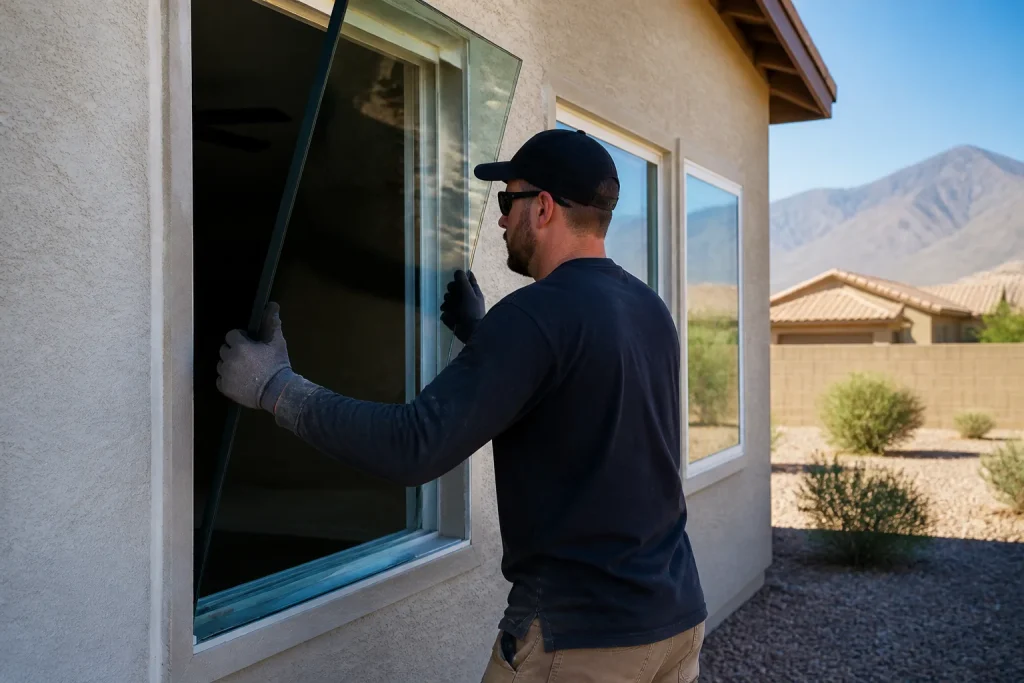
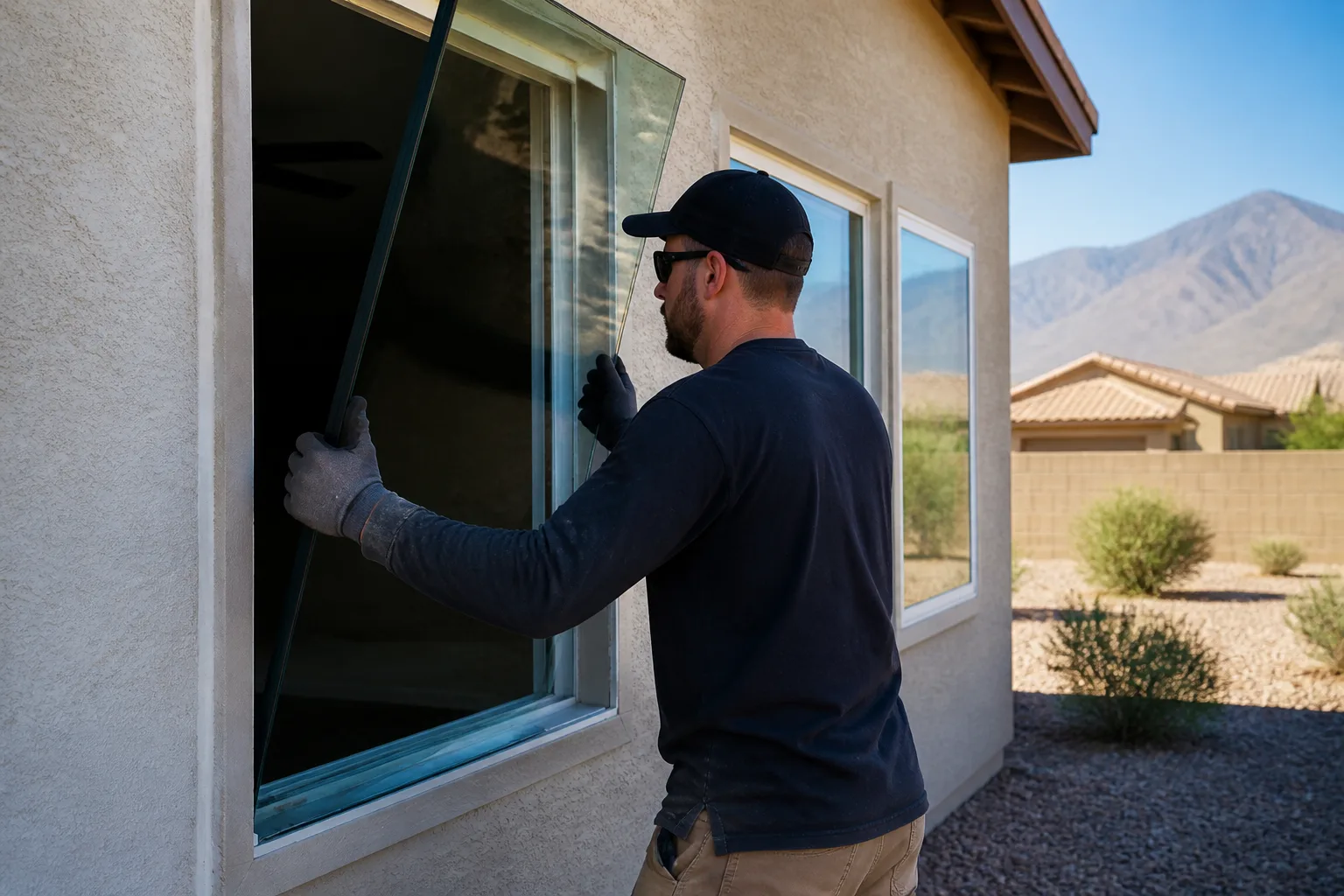
Glass is half the job. The other half is how it lands in the rough opening (the framed hole in the wall where the window goes). Mr-Glass units are good; poor installation will make a good unit leak, rattle, or fog within a few years. Here’s what to inspect while the opening is still visible:
- Corner keys and joinery: The frame corners should be tightly fused or keyed, with no visible gap at the miter. Run a fingernail along the seam. If it catches, the corner is separating.
- Square and plumb: A unit racked out of square by even a quarter inch won’t seal properly and the sash won’t operate smoothly.
- Shimming: Proper shims at the sill and jambs, not wedged in randomly. Uneven shimming is what causes sagging sashes two summers later.
- Flashing and sill pan: Water intrusion is the number one cause of failed window installations in Enterprise, especially during monsoon season. The sill pan and flashing should be in before the unit is set, not squeezed in afterward.
- Caulk line: A clean, continuous bead. Smeared caulk hiding a badly fitted frame is the tell of a rushed install.
We pulled one out of a home in the Enterprise foothills that had been caulked so heavily the homeowner never saw that the corner key was broken and the frame had shifted. It looked fine from inside until the first monsoon came through. That’s why you look before the caulk goes on, not after.
Related services in Enterprise: if you’re weighing repair against replacement, our Window Repair in Enterprise page walks through what’s fixable and what isn’t. And if you’re updating the entryway at the same time, we handle Front Door Replacement in Enterprise as well.
What does the Mr-Glass warranty actually cover, and what’s missing?
Mr-Glass, like most manufacturers, backs the glass unit itself with a warranty against defects, typically covering seal failure, fogging, and glass breakage from manufacturing flaws. That’s a real benefit and worth having. But read the fine print: the manufacturer warranty does not cover the installation, the frame setting, the flashing, or the sealant. Those are the installer’s responsibility.
So you need two pieces of paper:
- Manufacturer warranty on the glass unit: Covers fogging, seal failure, and glass defects. Usually handled through the manufacturer, sometimes with the installer as the middleman.
- Installer’s workmanship warranty: Covers the labor, the flashing, the sealing, and the fit. This is what protects you if the window leaks at the sill or the frame shifts.
Ask for both in writing before the job starts. A verbal promise of “we stand behind our work” isn’t a warranty. At Hale Windows & Doors Enterprise, every job carries our 365-Day Done Right Promise, and every repair carries a written guarantee with a free second visit if it fails. We put the price in writing before work begins and back the installation with a named guarantee so you know exactly what happens if something goes wrong.
Where does Mr-Glass land on price compared to ECO Window Systems and Milgard?
Homeowners in Enterprise ask this constantly, and the honest answer is: Mr-Glass usually sits at or below the middle of the pack for comparable specifications. It’s a strong value choice, especially when you match tiers to elevations rather than buying the same SKU for every window.
For a rough reference, here’s where the brands typically fall for a standard dual-pane solar-control unit in the Enterprise market:
- Mr-Glass: Entry to mid-range pricing. Best value when you’re willing to spec glass by elevation.
- ECO Window Systems: Mid-range, often slightly higher than Mr-Glass but with strong energy-performance options for desert climates.
- Milgard: Mid to upper-range. Premium name, wide dealer network, solid warranty support.
- PGT and ViewLux: Upper-range, typically spec’d for larger openings and more demanding wind or thermal requirements.
Prices shift with size, glass package, and frame material, so get a written quote with the exact SKU, glass make-up, and SHGC value spelled out. If a quote just says “low-E glass,” ask for the spec sheet. That’s where the real comparison lives. Hale installs and services eight professional lines, including Mr-Glass, ECO Window Systems, PGT, and ViewLux, so we can tell you where each lands for your specific elevation and budget.
For a broader look at how replacement fits into an Enterprise home, our Window Replacement in Enterprise page covers the full process. You can also start at the Hale Windows & Doors Enterprise home page for an overview of what we do.
When to call a pro
Replacing a window isn’t a project to take on yourself, especially in a climate where a bad seal means heat gain and monsoon leaks. A few signs it’s time to call us:
- The glass is fogged between the panes, meaning the seal has failed.
- You feel radiant heat pouring off a west-facing window in the afternoon.
- The frame is warped, the sash sticks, or you see daylight at the corners.
- Your energy bills have crept up over the past two summers with no other explanation.
Our technicians have up to 17 years of experience, and every one is background-checked, identity-verified, photo-badged, and sent to you by name and photo before the visit, which is part of what we call the Threshold Standard. You know who’s at the door before you open it. Live phone support answers every call, 24 hours a day.
The Bottom Line
Mr-Glass is a good value for Enterprise homeowners who understand the climate. The key is matching the right series and glass package to each elevation, aiming for SHGC under 0.25 on west and south walls, and getting both the manufacturer warranty and the installer’s workmanship warranty in writing. Get the spec sheet, not just the brand name, and you’ll spend your money where it actually cuts heat.
If you’re in Enterprise and want help, Hale Windows & Doors Enterprise offers free estimates. Call (866) 616-0837 to schedule yours today.
Frequently Asked Questions
Yes, with the right series. Mr-Glass offers solid value and the solar-control tiers work well in Enterprise’s desert heat, but the entry-level tiers aren’t built for full west-wall sun exposure. Match the tier to the elevation and it’s a strong choice.
Aim for SHGC under 0.25 on west- and south-facing windows, and 0.35 to 0.40 on north- and east-facing ones. This balancing act is what keeps an Enterprise home comfortable without over-darkening the interior. Call (866) 616-0837 for help reading a spec sheet.
No. The manufacturer warranty covers the glass unit itself, including seal failure and manufacturing defects. The installation, flashing, and sealing are covered by your installer’s workmanship warranty, so you need both documents in writing before the job starts.
A typical whole-home replacement takes one to three days depending on how many windows and the configuration. Individual units can be done in a few hours. Schedule a free estimate at (866) 616-0837 and we’ll give you a clear timeline before work begins.
Written by the team at Hale Windows & Doors Enterprise.
Need Windows & Doors Help?
Call Hale Windows & Doors Enterprise - licensed & insured, here with fast after-hours help in Enterprise.
(866) 616-0837